70 Years of Innovation in Wood Cement Technology – And What Comes Next
From one automated step in a local factory to a global technology provider, this article follows the development of Eltomation over 70 years and the path ahead. It highlights how practical engineering, continuous innovation and deep process knowledge have shaped wood cement production – while creating the foundation for new applications in a more sustainable construction industry.
It Began With Automating a Single Step
In the early 1900s, wood wool cement board (WWCB) was invented in Austria. Even by the 1950s, the production process remained largely manual. Workers measured raw materials by hand, filled the moulds themselves and removed and stacked the boards one at a time. It was demanding work, and it limited both output and consistency.
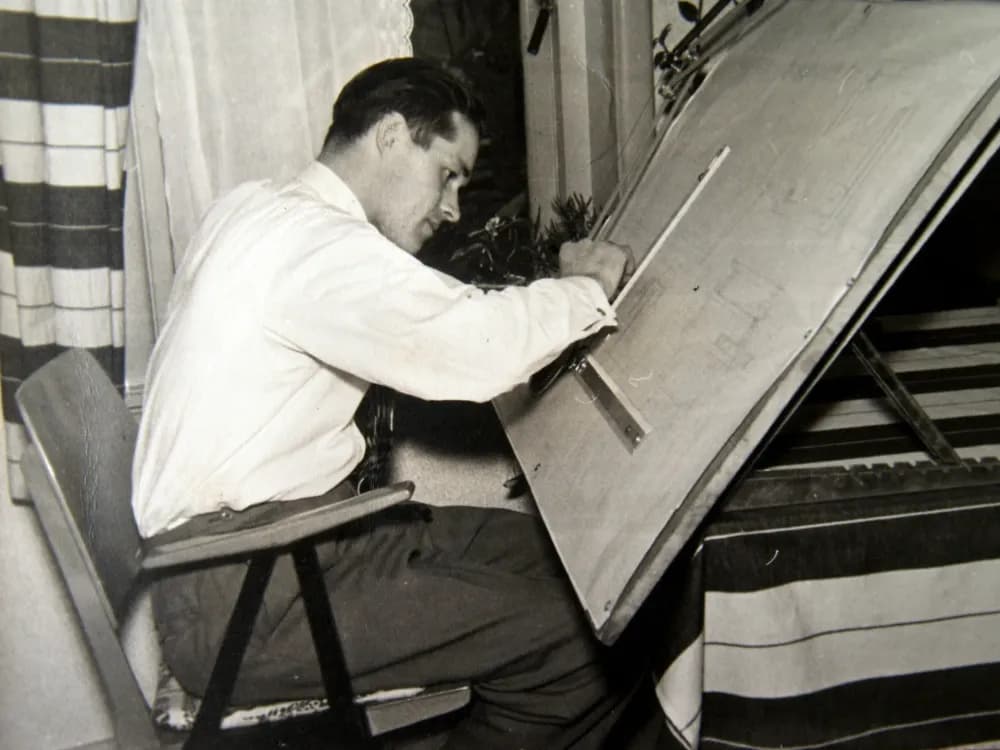
During this period, a WWCB factory in Barneveld approached a young mechanical engineer, Gerry van Elten, to help solve a persistent production problem. He designed a simple mechanical solution that automated a single step in the process. The effect was immediate. One improvement made the line more reliable and sparked his interest in exploring broader market opportunities.
Post war Europe was rebuilding rapidly. Demand for fire safe, moisture resistant and insulating materials increased, and WWCB found its strongest position in European markets. Gerry considered moving to Canada, but as more factories expressed interest in his automation solutions, he chose to remain in Europe. He went on to establish an engineering company dedicated to improving and automating WWCB plants.
Family holidays soon became road trips across Europe, visiting factories and refining equipment on site. The projects were modest in scale but formative in experience. Over time, these early years laid the foundation for what would eventually become Eltomation, known today for designing fully automated WWCB and wood wool production lines.
Every story has a beginning. Ours started with the decision to automate one step and the belief that meaningful progress often begins with a simple idea.
A Material With Many Lives
When wood wool cement board (WWCB) emerged in the early 20th century, it was a material ahead of its time. A simple combination of wood wool, cement and water produced a board that was fire‑safe, moisture‑resistant and thermally stable. Those properties made it attractive in a Europe that was rebuilding, re‑industrialising and redefining its construction methods.
But WWCB also had a curious history. Its popularity rose and fell in waves, depending on regional building traditions, economic cycles and the availability of competing insulation materials. In some countries it became a familiar building component. In others, including the United States, it never truly entered the mainstream. Construction habits, material preferences and regional regulations shaped the fate of the product as much as its technical qualities.
By the 1950s and 1960s, Europe was the centre of WWCB manufacturing. Factories across Austria, Germany, the Netherlands, Scandinavia and Eastern Europe produced boards for everything from agricultural buildings to schools, industrial halls and roof structures. It was valued not only for its performance but for its robustness. WWCB could tolerate moisture, temperature swings and handling conditions that caused many competing materials to fail.
Yet the material’s evolution stalled for decades. Production remained labour‑intensive. Quality depended heavily on operators. Market applications changed slowly. It was a reliable material, even an ingenious one, but without further development it risked falling behind.
This is the landscape in which Gerry van Elten was working. As he visited factories across Europe, he saw both the strengths and the unrealised potential of WWCB. The material could do much more than the machinery allowed. The question was not whether WWCB had a future, but whether production technology could evolve far enough to unlock it.
That question would guide the next decades of engineering and ultimately shape the direction of the company that would later become Eltomation.

The First Steps Toward Automation
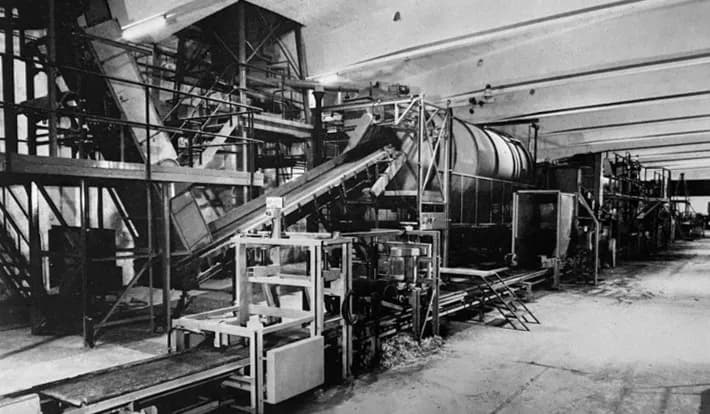
By the 1960s and 1970s, wood wool cement board (WWCB) manufacturing had begun to change, but only gradually. The material had proven its value, and demand remained stable, yet production technology lagged behind. Most factories still relied heavily on manual labour. Even small improvements required careful on site adjustments, and consistency depended as much on the skills of operators as on the machines themselves.
For Gerry van Elten, these limitations were not obstacles but opportunities. Each factory he visited revealed the same story: a material with strong properties, held back by outdated equipment. Step by step, he worked with producers to introduce mechanical improvements that reduced bottlenecks, streamlined specific operations and improved reliability. None of these upgrades transformed the entire process, but collectively they laid the groundwork for something larger.
The shift from manual to mechanised production was not sudden. It unfolded through dozens of incremental refinements. Better dosing. More reliable mould handling. More predictable board setting. More consistent curing. Each improvement solved a local problem, but together they began to reshape the production environment as a whole.
As these enhancements accumulated, the attitude inside many factories began to change as well. What once had been accepted as “the way it is done” started to feel outdated. Producers saw the value of dependable output and repeatable quality. They realised that WWCB technology did not need to remain rooted in the practices of the early 20th century. It could evolve.
These years also forged the working style that would later define Eltomation: designing solutions that were not just mechanical fixes but building blocks for full automation. The goal was never to replace people. The goal was to give the material – and the factories producing it – the room to grow.
By the end of this period, it had become clear that a more ambitious step was possible. The industry no longer needed single point improvements. It needed a comprehensive production concept built from the ground up, one that could guarantee quality, streamline workflow and scale output far beyond what manual processes allowed.
The Moment Eltomation Took Shape
By the late 1970s and early 1980s, the industry was at a crossroads. WWCB had proven itself as a reliable building material, but new insulation products such as mineral wool were reshaping the market. With lower thermal conductivity and strong performance in energy efficient construction, mineral wool began to replace WWCB in many applications. Factories that relied on older production methods struggled to remain competitive.
It was in this context that Bert and Paul van Elten joined the business. Their arrival coincided with the introduction of PLC‑based control systems and new opportunities for automation. These technologies did not immediately lead to fully integrated production lines, but they enabled a series of important improvements throughout the manufacturing process.
In the early years, the focus was on targeted upgrades rather than complete systems. Much of the work involved improving specific steps within existing WWCB plants. A key area of development was the accurate dosing and distribution of the wood wool cement mix into the moulds. These forming stations made a significant difference in board quality and consistency, addressing one of the most critical parts of the process.
Throughout the 1980s and 1990s, existing factories were modernised step by step, often without replacing entire production lines. At the same time, the possibilities of automation became clearer. Each improvement demonstrated that better control, repeatability and reduced manual intervention were achievable. These experiences formed the technical and practical foundation for the next phase: moving beyond individual upgrades toward fully automated production concepts.
In later developments, this shift would accelerate further – most notably with the introduction of the Eltomatic, which would have a major impact on wood wool production itself.

A Changing World of Wood Wool Cement
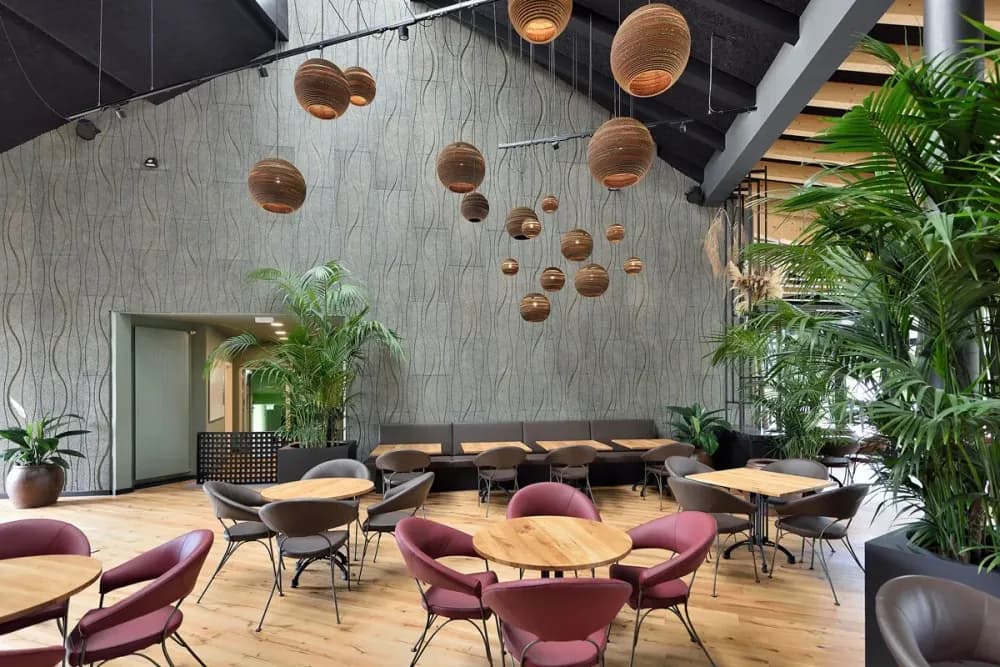
As the industry moved into the late twentieth century, WWCB was no longer used only as a functional layer in agricultural or industrial buildings. It increasingly became a visible acoustic finish in schools, sports halls and public buildings. That shift brought new demands: finer wood wool fibres, cleaner surfaces and a more consistent appearance across every board.
This new role for WWCB also led producers to explore different aesthetics. The transition from grey cement to white cement helped reveal the natural colour of the wood wool. Painted boards, grooved patterns and CNC machined designs followed, turning a once hidden material into a deliberate architectural choice. These developments required a level of fibre control and process stability that older machinery simply could not deliver.
At the same time, safety expectations around wood wool production were rising. Traditional shredders posed operational risks, and manual intervention was still common in many factories. A safer, more predictable way to produce wood wool was becoming essential, not optional.
Sustainability was also gaining momentum. Producers recognised WWCB’s inherent ecological strengths, but customers increasingly wanted proof: documented sourcing, reduced waste and recognised certifications such as Cradle to Cradle. Clear environmental positioning was becoming as important as technical performance.
All these developments pointed in the same direction. WWCB had the potential to serve new markets and stricter standards, but only if the machinery behind it could provide finer fibres, safer operation and consistent quality at scale. Incremental adjustments were no longer enough. What the industry needed was a new generation of equipment designed specifically for modern expectations.
This realisation set the stage for the next major step in our story – the creation of the Eltomatic, a machine that would redefine how wood wool could be produced.
The Development of the Eltomatic
By the end of the twentieth century, WWCB producers were confronted with a new set of challenges. Factories needed finer, more uniform fibres for visible acoustic applications, safer wood wool production, and greater consistency to support modern finishes such as white cement, painted surfaces and CNC machined designs. At the same time, labour costs were rising, and producers were looking for ways to increase capacity without expanding their workforce. Incremental improvements to older machinery were no longer sufficient.
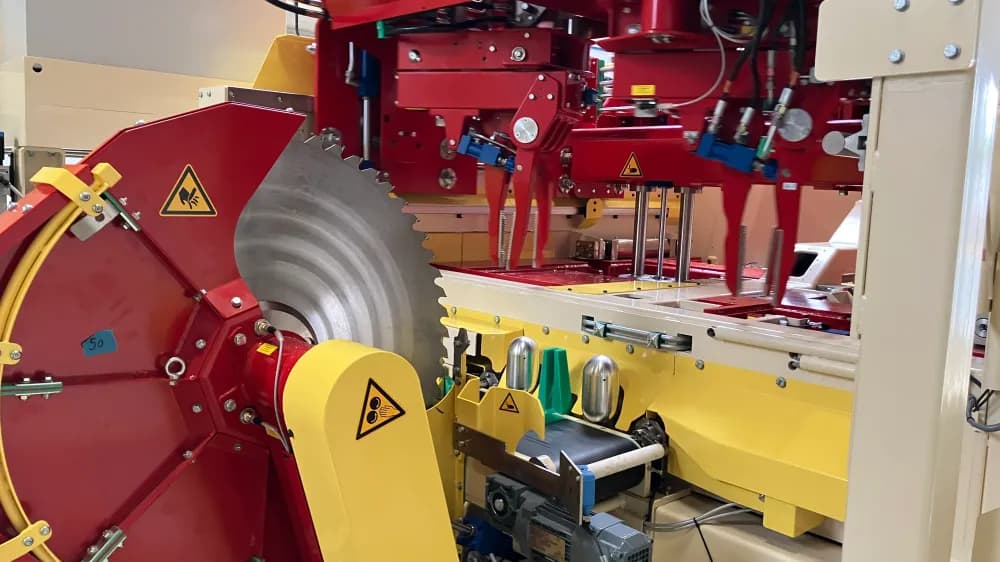
This was the moment when the Eltomatic CVS-16 Wood Wool Machine took shape.
Traditional wood wool machines had changed little over the decades. They required significant manual intervention, produced fibre with wide variation and posed safety risks inherent to their open cutting systems. They also struggled to support the higher volumes and finer fibres that modern applications demanded. For producers facing pressure to improve quality while controlling labour cost and expanding output, the old approach had reached its limit.
The Eltomatic was designed to address all these needs at once. It introduced a safer, enclosed shredding mechanism and provided a new level of control over the fibre cutting process. It delivered finer, more consistent fibres suitable for architectural applications, while also offering high capacity production with dramatically reduced operator input. For factories balancing labour shortages, rising wages and tighter performance specifications, this combination proved transformative.
After initially starting with a prototype machine with lower capacity, the first Eltomatic for full production was delivered in 1999. Since then, dozens of units have been installed around the world, each contributing to cleaner fibre quality, safer operation and significantly higher throughput. The fiftieth unit will soon enter production – a milestone that reflects both the durability of the design and the central role the machine has played in modernising wood wool production. In the next section, we explore how this shift in fibre quality and production capability reshaped the types of WWCB products factories could offer.
Scaling Acoustic Boards to Industrial Production
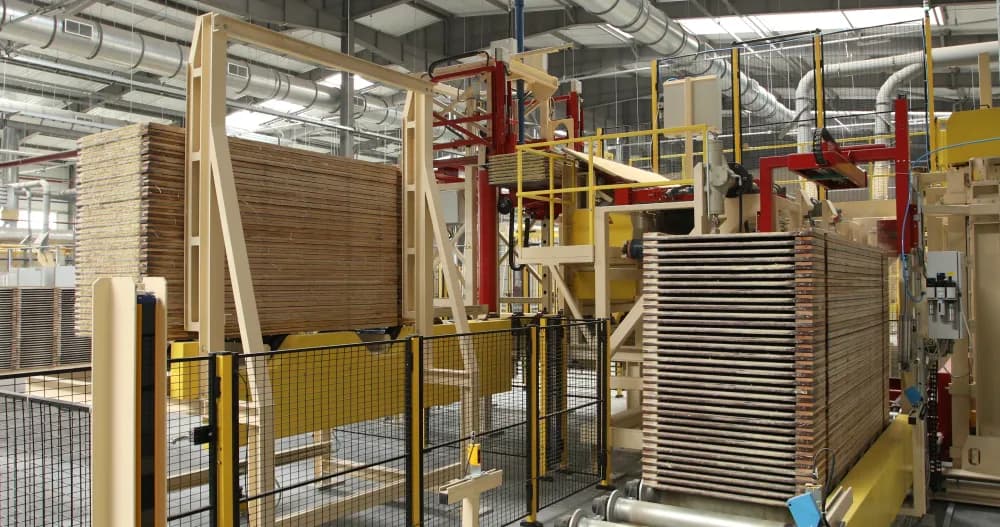
With the introduction of the Eltomatic and modern production technology, wood wool production entered a new phase. For the first time, manufacturers could combine high capacity with consistent fibre quality at industrial scale. A modern production line with two Eltomatics can deliver around 4,400 m² of acoustic ceiling boards per shift, supported by wood wool production capacities of approximately 2,500 kg (5,000 lb) per hour.
This step change was not only about output, but also about efficiency and control. The Eltomatic converts around 97% of each wood block into usable fibre, significantly reducing waste. At the same time, the process eliminates the need for manual block placement, improving operator safety and creating a more stable and predictable production environment.
These improvements had a clear impact on the acoustic board market. WWCB evolved from a mainly functional product into a solution that could serve both standard applications and more demanding, design driven projects. Producers were able to supply large volumes with consistent quality, while also meeting higher expectations from architects and clients.
As production became more controlled, expectations around appearance also evolved. The uniformity of the fibres allowed for cleaner surfaces, while the use of white cement enhanced the natural colour of the wood wool. Painted finishes, grooves and CNC machined patterns further expanded the design possibilities, enabling architects to integrate acoustic performance into the visual identity of a space.
What had once been a purely functional material became part of architectural design. Acoustic boards were no longer hidden, but actively used to shape spaces through texture, rhythm and colour.
This combination of capacity, efficiency and design flexibility established acoustic WWCB as a mature, scalable product, ready for broader application.
Expanding Beyond Acoustic Boards
The advances in fibre quality, capacity and process control described in the previous post did more than scale acoustic board production. They created the foundation for an entirely new generation of wood cement products.
Once manufacturers could produce wood wool with consistent geometry and predictable performance, it became possible to move beyond low density acoustic boards. One important development was the introduction of medium/high density wood cement boards, such as EltoBoard. By using wood strands and increasing the density, these boards offer greater mechanical strength and improved load bearing characteristics. This opened applications in construction where robustness and structural performance are more critical than acoustic absorption.
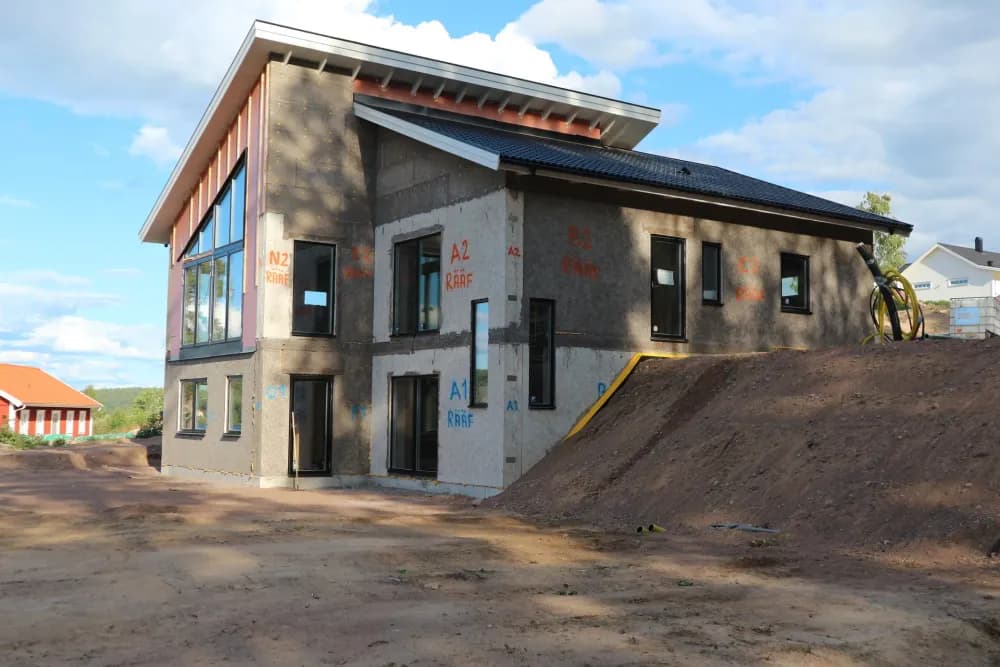
At the same time, important innovations enabled the production of larger panel formats and complete insulated wall elements. These elements combine the familiar properties of wood cement composites – fire resistance, durability and moisture tolerance – with the dimensional stability required in building applications. In Scandinavia, several hundred houses have already been built using such elements, demonstrating that the concept works in practice.
However, these wall systems have not yet become mainstream. The construction sector tends to move cautiously when it comes to alternative building methods, especially when they challenge established structural practices. At the same time, the broader context is changing. The search for more sustainable building solutions is accelerating, and materials based on natural fibres are gaining renewed attention. In modern construction, the combination of performance, prefabrication and ecological impact has never been such a prominent topic. This creates a clear opportunity for wood cement systems to move beyond proven projects and find wider acceptance in the years ahead.
Taken together, these developments show how wood cement technology has evolved from a single product into a broader platform. With the right conditions, the range of applications will continue to expand.
Why Sustainability Brings Wood Wool Cement Back Into Focus
Over the past decades, the role of building materials has gradually evolved. Performance alone is no longer enough. Today, materials are increasingly assessed on their environmental footprint, their origin and their contribution to a more sustainable built environment. This shift is bringing renewed attention to wood cement composites.
Wood wool cement boards combine a renewable raw material with a durable mineral binder. The wood fibres store biogenic carbon, while the cement provides strength, stability and longevity. This results in a product that performs reliably for decades and requires minimal maintenance, reducing its impact over the full lifecycle of a building.
At the same time, the environmental footprint of wood cement products is closely linked to the cement component. Developments in the cement industry therefore have a direct influence on the sustainability of WWCB. Across the sector, efforts are underway to reduce emissions by lowering clinker content, improving energy efficiency and introducing alternative binders. As these developments continue, the environmental profile of wood cement boards improves along with them.
As these developments continue, they are already shaping current practice. Producers are placing increasing emphasis on transparency and certification, using systems such as Cradle to Cradle to clearly demonstrate the environmental performance of their products. Environmental product declarations and other forms of documentation have become standard tools to support architects, developers and regulators in making informed choices.
For a material with a long history, this creates a new perspective. WWCB is not only a proven solution from the past, but also a relevant material for the future. Its combination of durability, natural fibres and steadily improving environmental performance positions it well in a construction sector that is rapidly redefining itself.

Seventy Years of Progress, and the Road Ahead
Looking back, the story of Eltomation begins with a single technical improvement. One step in a production process was automated, and it changed the way wood wool cement boards could be made. From that point onward, the guiding principle has remained the same – improve the process, and new possibilities will follow.
Over the decades, WWCB has moved from a functional material to a visible and valued component in modern buildings. Acoustic ceiling systems in schools, sports halls and public buildings have become well established, supported by reliable and scalable production technology.
Looking ahead, the next phase is already taking shape. The use of acoustic boards is expanding beyond public spaces into restaurants, offices and private businesses, where sound comfort is becoming a key element of user experience. At the same time, awareness of acoustics in residential buildings is increasing. Homes are changing, with more open spaces and different usage patterns, and this is creating new demand for materials that combine performance with a natural appearance.
A further step lies in the development of complete building components. Wood cement materials are increasingly being explored as insulating wall sections and structural or semi structural boards, offering a combination of durability, fire resistance and thermal performance. The technology to produce these systems at scale is already available, and interest in alternative construction methods is growing.
This reflects a broader shift in construction. Materials are no longer chosen only for cost and performance, but also for their sustainability, their origin and their contribution to the quality of a space.
Seventy years after the first automated step, the direction remains the same. By continuing to improve the process, new applications and new markets will continue to emerge.